
ADL – ANTI-DEFAMATION LEAGUE – OLD TITLE – SAME STORY
THE FOLLOWING WAS PRODUCED BY THE ANTI-DEFAMATION LEAGUE (ADL)
Introduction
On July 10, 1933, nearly a decade before the Holocaust, Dr. Paul Joseph Goebbels, the Nazi Minister of Propaganda, was on the front cover of TIME Magazine, stating “THE JEWS ARE TO BLAME!”1
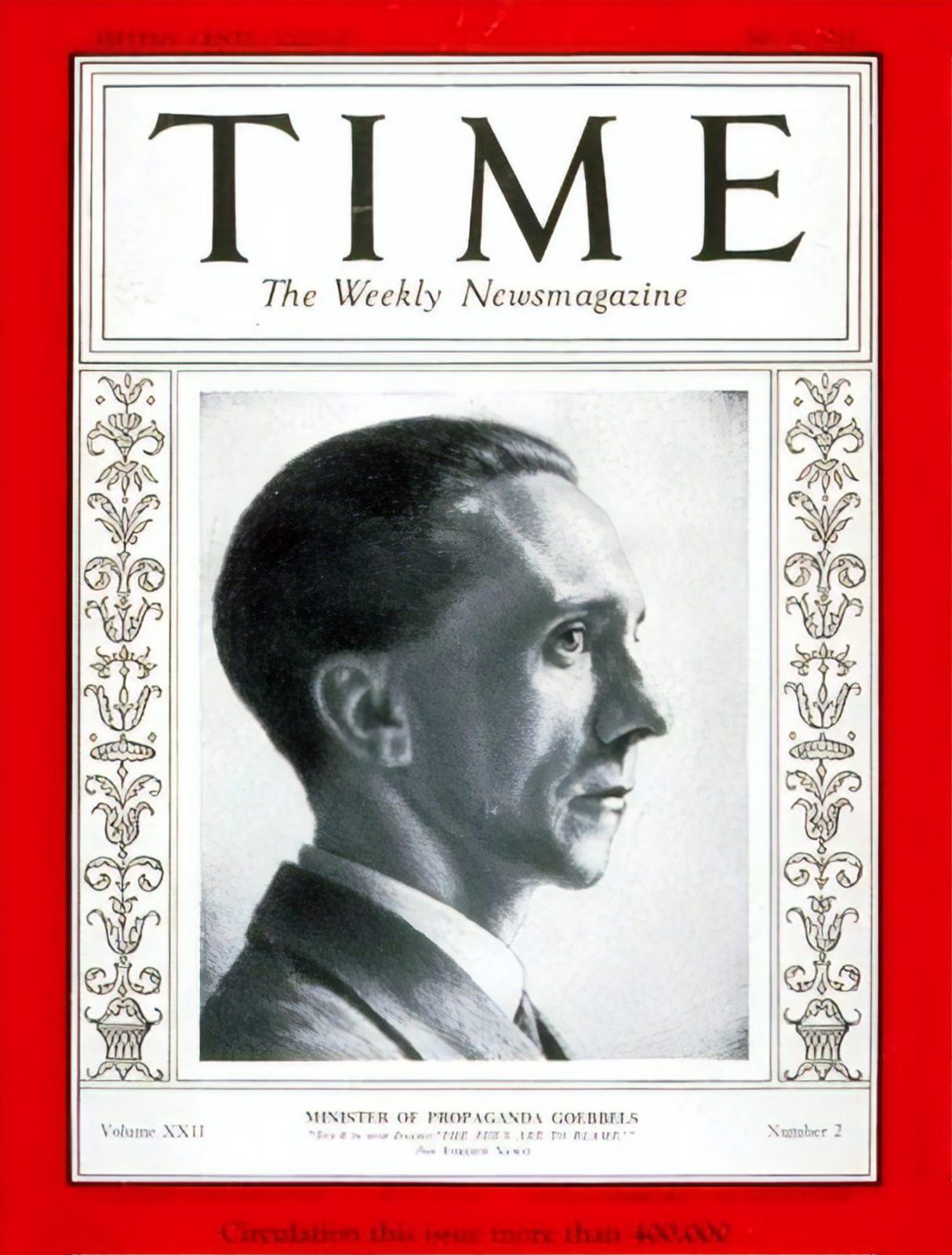
Nazi Propaganda Minister Joseph Goebbels featured on the cover of Time, July 1933.
In the years that followed, millions of Jews across Europe were terrorized, hunted and murdered by Nazis, their collaborators and those coerced by them. While the Holocaust was unique in the systematic, industrial means it employed to annihilate the Jewish people, large scale persecutions and killings of Jews did not start with the Nazis. They have happened during other times and in other regions. Indeed, hatred of Jews existed for millennia before the Holocaust and did not end with the murder of the six million. We must remember that the warning signs leading up to even the most lethal of social epidemics are typically far from immediate or obvious. And so today, it is our collective responsibility to recognize the patterns of hate-based prejudice, how this mindset takes root and even more so how it operates.
While antisemitism has sometimes escalated to violent or genocidal levels, it more often appears in subtler ways, such as insensitive remarks that are brushed off, or negative stereotypes that go unchallenged. We must never normalize even seemingly harmless forms of hate-based prejudice; this is what strengthens dangerous social attitudes, which can erode the values of even the most just society. Silence and complacency in the face of biased remarks or actions permit others to internalize harmful messages, making such messages commonplace. Antisemitism is unique in many ways, but, like other forms of hate, it grows in silence and blossoms in acquiescence.
And yet it is not always easy to recognize and combat antisemitism. For example, while knowledge of the Holocaust helped banish overt antisemitism in many contexts in the postwar decades, surprising numbers of young people today are unaware of the most basic facts about what happened to Europe’s Jews during World War II. According to a nationally representative March 2018 survey, commissioned by the Conference on Jewish Material Claims Against Germany, only 36 percent of millennials (ages 18-34) in the United States knew that six million Jews perished during the Holocaust.2
As survivors enter their final years and society moves forward, the Holocaust recedes from public memory, making Nazism appear almost other-worldly, like a historical impossibility. Moreover, many of those who truly are familiar with the history of the Holocaust or other massive anti-Jewish atrocities are unable or unwilling to recognize subtler manifestations of antisemitism, envisioning many contemporary Jews as a privileged group that is not sufficiently vulnerable to warrant significant concern or action. These and other factors explored below have contributed to a decrease in the previous stigmatization of antisemitic attitudes and a tendency not to take warning signs seriously.
Antisemitism has commonalities with racism, anti-Muslim bias, xenophobia, homophobia, transphobia, misogyny and other forms of hate and discrimination. It also has certain unique characteristics as a specific set of ideologies about Jews that has migrated across discourses. In almost every part of society, this hatred has been conjured and adjusted to suit the values, beliefs and fears of specific demographics and contexts. We cannot fight antisemitism without understanding how it is both intertwined with other forms of prejudice and how it is unique.
This report will help to identify what antisemitism is and how it manifests, from the ancient past to the present day. With a long history as a distinct minority group living in exile, Jews in various contexts across the globe have been misunderstood and subject to harmful characterizations that have endured through the ages. Accordingly, Jews often have found themselves wrongfully scapegoated, reviled, persecuted, expelled and murdered. They have been an easy target from all sides, sometimes attacked for remaining “too different” from dominant majority cultures or conversely for blending in “too well” within these same societies. Despite the diversity of Jewish people and of Judaism as a religion, antisemitism understands Jews as an unchanging, negative force in the world and draws on a deep reservoir of lies and propaganda to support that faulty understanding.
While antisemitism obviously harms and worries Jews, we must also be mindful that it threatens democracy and is an indicator of the health of a society as a whole, of a society’s capacity to think reasonably and behave humanely. Antisemitism attacks Jews specifically, but it is the body politic that is ultimately impoverished by it.
We face complicated challenges in today’s world. The lack of simple, straightforward answers embolden those who seek an easy culprit on whom to blame those problems. The hateful myths and conspiracy theories levied against Jews throughout history offer accessible templates for such blame. Cultures of silence and complacent attitudes have helped antisemitism to gain new currency in the United States and around the world. Without the requisite knowledge to recognize this evil, we are at a disadvantage to stop it.
In the pages that follow, we examine the history of antisemitism in order to understand its roots and how it has been linked with wider narratives and power structures and, thus, to debunk the acceptance it has increasingly been granted. We then examine seven of the most common antisemitic myths. These tropes have been repeated knowingly and unknowingly, too often leading to violence. For each myth, we offer context and examples to help identify it.
With mounting threats against marginalized communities on today’s global stage, there is urgency. In this environment, it is imperative for each and all of us, Jewish or not, to understand and speak out against the so-called oldest hatred and preempt future acts of violence such attitudes might encourage. We have to know what antisemitism is, to be able to see it in practice, and to be willing to oppose it now.
FOOTNOTES
- Lilly Rothman, “’It’s Not That the Story Was Buried.’ What Americans in the 1930s Really Knew About What Was Happening in Germany,” Time Magazine, updated July 10, 2018, https://time.com/5327279/ushmm-americans-and-the-holocaust/.
- Claims Conference, Conference on Jewish Material Claims Against Germany; “New Survey by Claims Conference Finds Significant Lack of Holocaust Knowledge in the United States,” http://www.claimscon.org/study/.
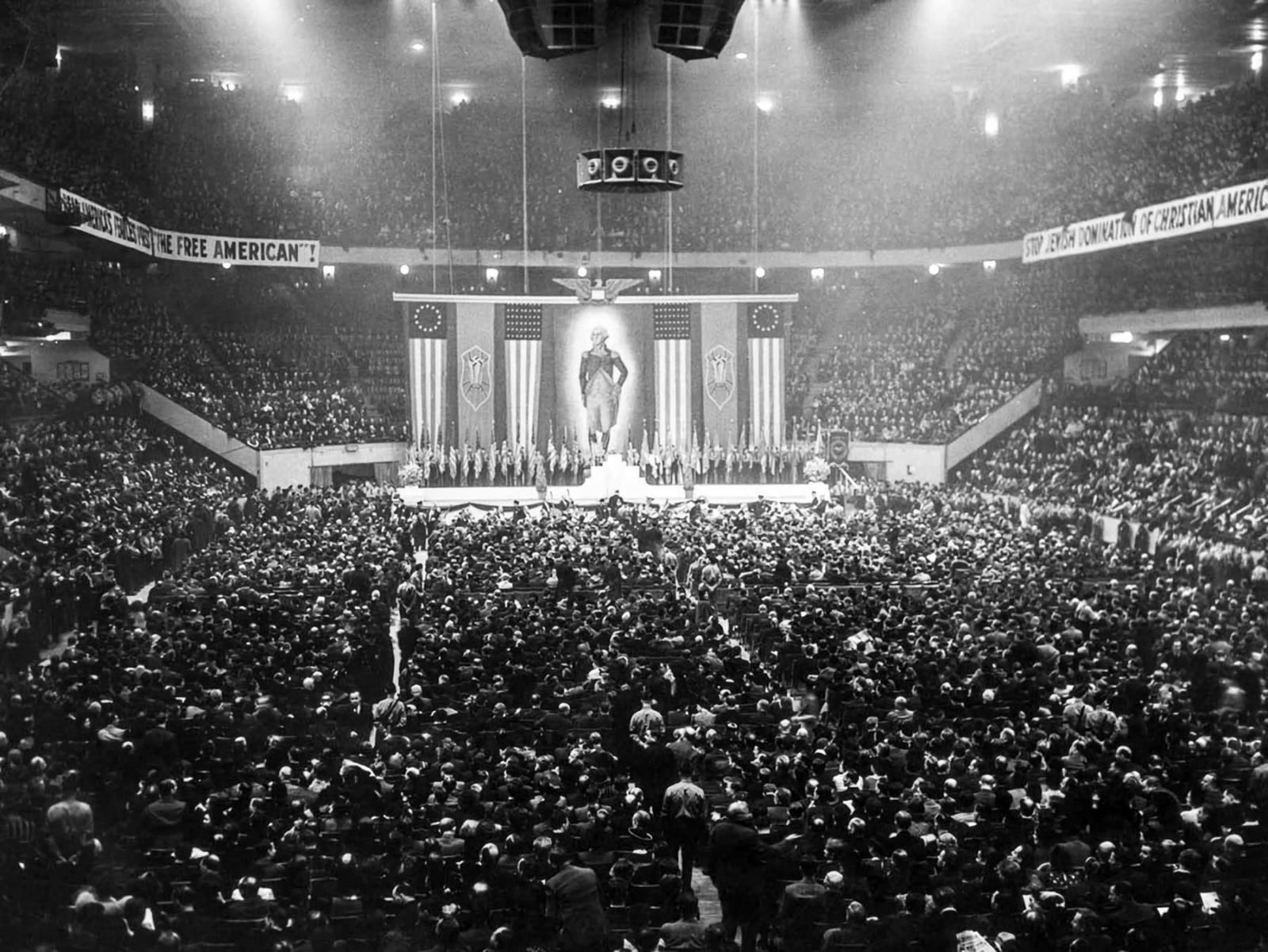
20,000 people attended the German American Bund rally held at Madison Square Garden on February 20, 1939.
Definition of Antisemitism
In early 2017, the editors of the Merriam-Webster Dictionary tweeted, “‘Antisemitism’ is among our top lookups this afternoon.”3 Four days later, they reported the same.4
It wasn’t surprising, perhaps, that so many people wanted to know what the term meant. They were reading about it and hearing about it more regularly, as antisemitic incidents in the United States rose in numbers.
Merriam-Webster’s cogent definition — “hostility toward or discrimination against Jews as a religious, ethnic, or racial group”5 — fails to provide a thorough consideration of this complicated issue. Of course, no single definition is perfect. The International Holocaust Remembrance Alliance (IHRA) convened a plenary of its 32 member nations in 2016. The researchers and scholars affirmed a lengthy working definition that begins with the following:
Antisemitism is a certain perception of Jews, which may be expressed as hatred toward Jews. Rhetorical and physical manifestations of antisemitism are directed toward Jewish or non-Jewish individuals and/or their property, toward Jewish community institutions and religious facilities.6
The IHRA definition includes numerous examples of how antisemitism can be manifested, including in classic and current forms, such as when criticism of Israel crosses the line from fair critique of policies into antisemitism. Some examples include:
- Denying the Jewish people their right to self-determination, e.g., by claiming that the existence of a State of Israel is a racist endeavor.
- Applying double standards by requiring of it a behavior not expected or demanded of any other democratic nation.
- Using the symbols and images associated with classic antisemitism (e.g., claims of Jews killing Jesus or blood libel) to characterize Israel or Israelis.
- Drawing comparisons of contemporary Israeli policy to that of the Nazis.
- Holding Jews collectively responsible for actions of the state of Israel.
This legally non-binding working definition provides valuable guidance for elected officials, law enforcement, university administrators, educational professionals and community leaders on what exactly is antisemitism and the many different forms it can take.
Why did it take a large panel to define a single term? Because antisemitism contains features that are both similar and different from other forms of hate or prejudice, reflecting a long, complex and specific set of histories regarding Jewish and non-Jewish relations.
As the IHRA’s definition indicates, antisemitism encompasses hatred of Jews on the basis of their existence as human beings, not simply as followers of the Jewish religion. It does so through contradictory logic that envisions Jews as both excessively powerful and as weak or even subhuman. In this respect, antisemitism departs slightly from racism. Racism often involves a clear power dynamic in which a privileged group believes itself to be naturally superior and attempts to retain its social advantages by persecuting or discriminating against other racialized groups. While most forms of racism focus on emphasizing the perceived weaknesses of another group, antisemites tend to portray Jews as both too strong and too weak, as well as the cause of all social problems.
The list of paradoxes is long. Jews have been blamed by racists for promoting racial equality and by racial minorities for promoting slavery and racism. Jews have been blamed by capitalists for preaching socialism and by socialists for alleged capitalist exploitation. Jews have been targeted by social conservatives for empowering sexual minorities and by queer activists for patriarchal conservatism. And the list goes on. Like non-Jews, Jews constitute a diverse population that does not act monolithically. However, the particular conditions of Jewish history, interpreted through antisemitic ideology, have contributed to perceptions of Jews as nefarious actors and manipulative magicians, always to blame. Thus, unlike other kinds of prejudice, antisemitism is a paranoid mentality that intertwines an imagined Jewish essence in relationship with other ideological concerns, prejudices or aims. Ultimately, it rests on applying simple, false explanations to complex social problems. Across eras and cultures, these ideas about Jews have been used to justify exclusion, discrimination, violence and genocide.
The primacy of antisemitism tends to be contextual and periodic. Antisemitism typically surges in times of political or economic uncertainty as well as rapid social change, often used as a tool of political manipulation or populist anger. We have seen this again and again throughout history.
In nearly every generation, centuries-old antisemitic stereotypes and myths are recycled. And because antisemitism in the present draws inspiration from hateful ideas of the past, exploring the historical origins of antisemitism is the first step toward understanding and addressing it and working to restrain and, ultimately, eradicate it.
FOOTNOTES
- Twitter; “Merriam-Webster”; https://twitter.com/MerriamWebster/status/832339726644441088.
- Twitter; “Merriam-Webster”; https://twitter.com/MerriamWebster/status/834047350926614533.
- Twitter; “Merriam-Webster”; https://www.merriam-webster.com/dictionary/antisemitism.
- International Holocaust Remembrance Alliance; “Working Definition of Antisemitism”, https://www.holocaustremembrance.com/working-definition-antisemitism.
The primacy of antisemitism tends to be contextual and periodic. Antisemitism typically surges in times of political or economic uncertainty as well as rapid social change.
Antisemitism In History
Antisemitism has followed the Jewish community across continents and through history, both globally and in the United States. Antisemitic myths continue to fester today.
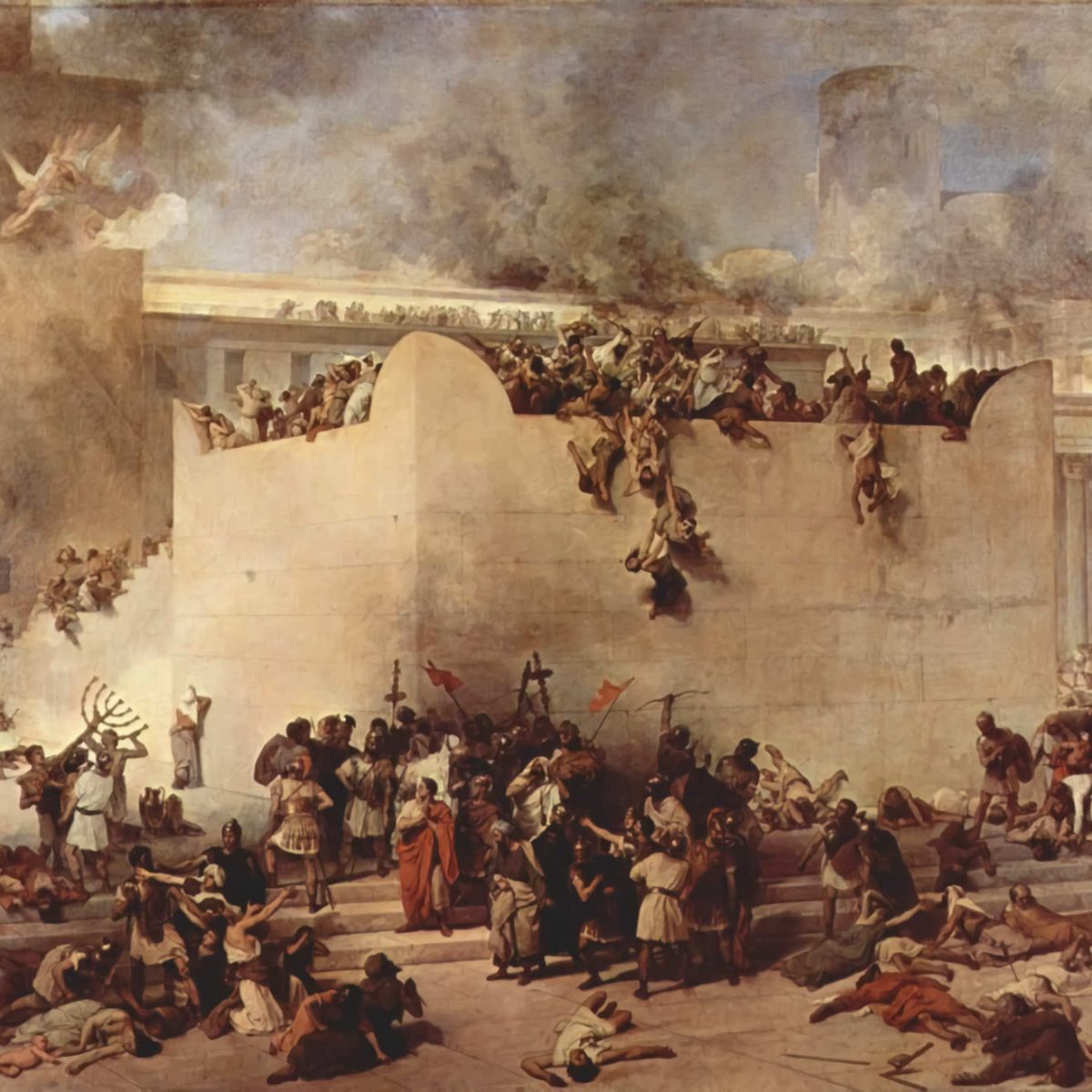
Antisemitism in Global History
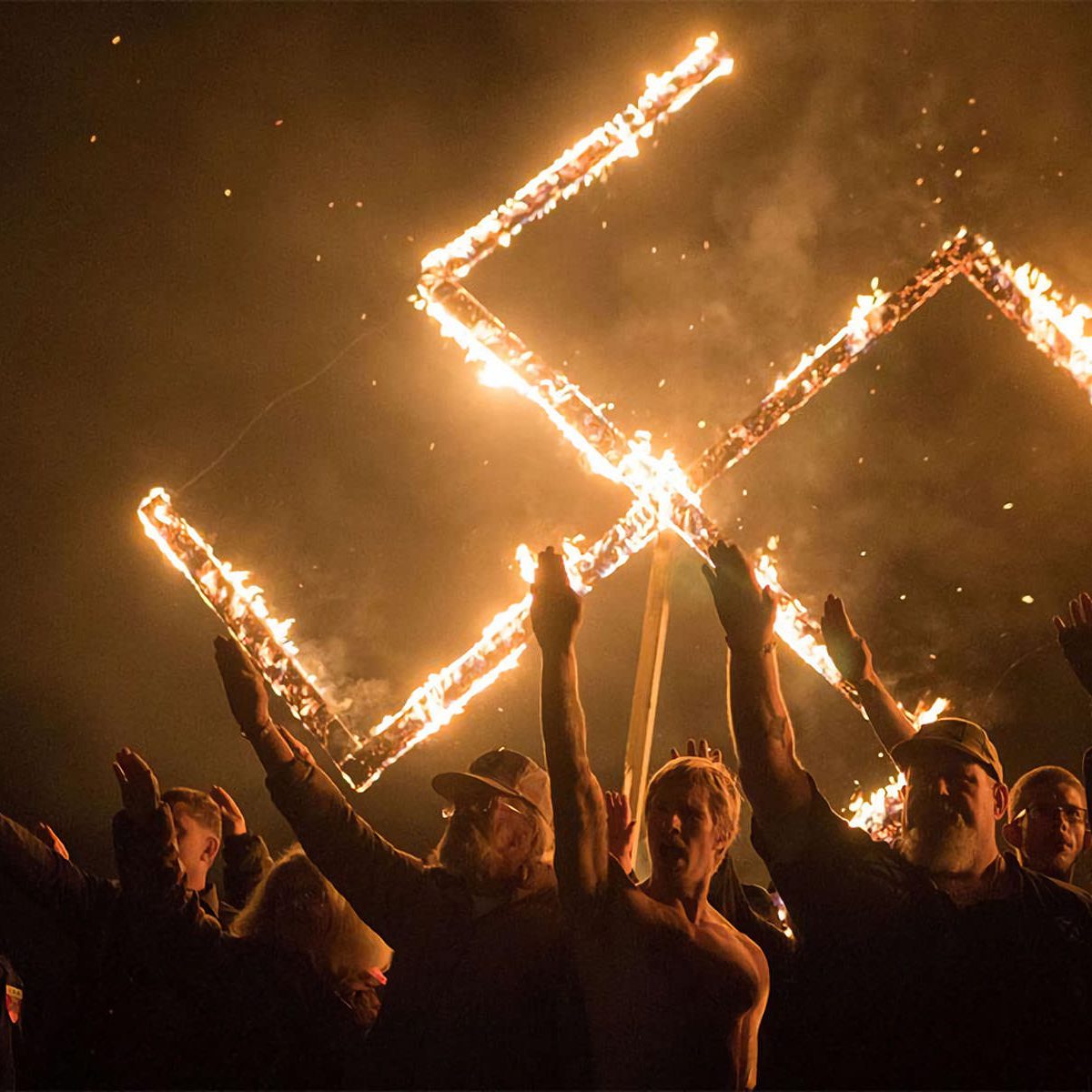
Antisemitism in American History
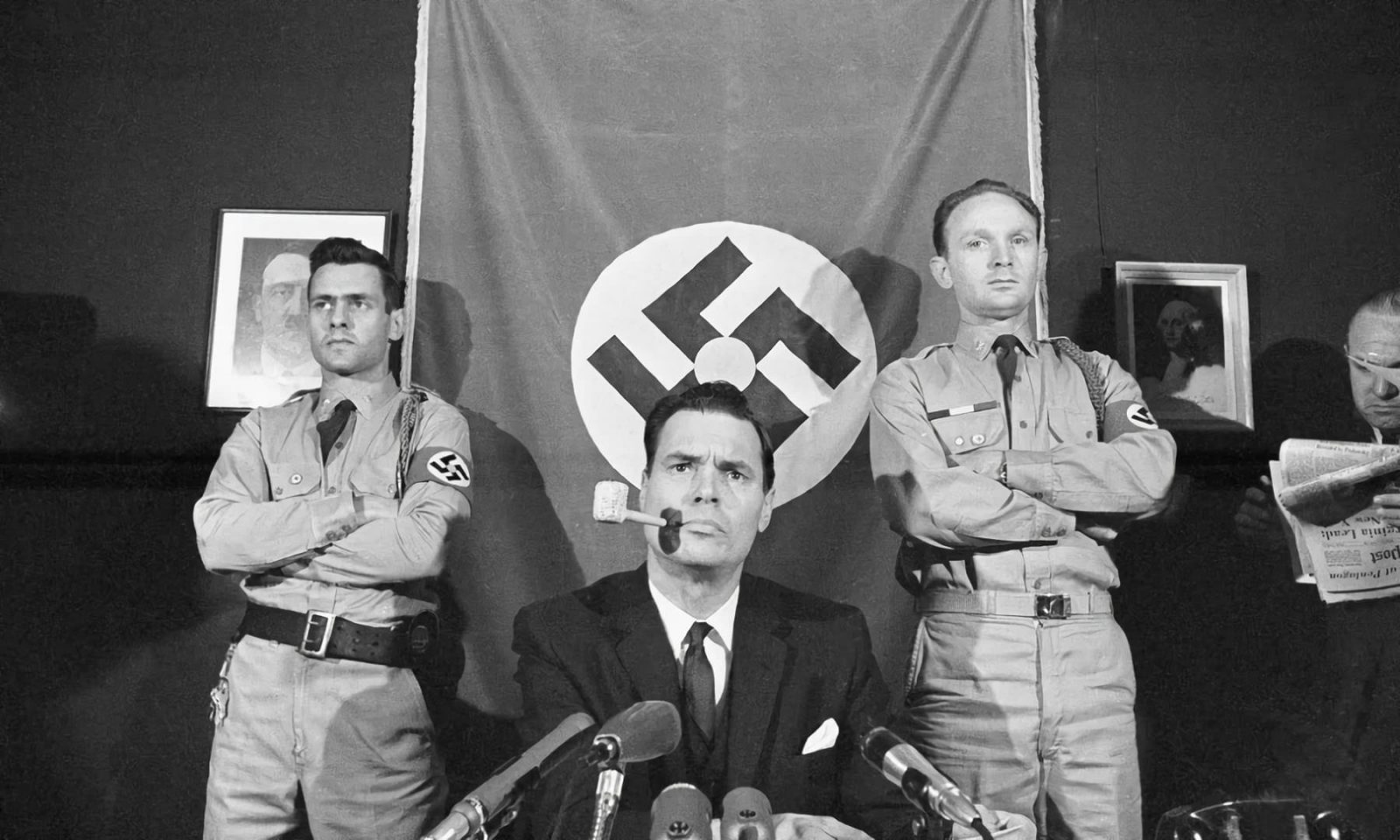
American Nazi Party founder George Lincoln Rockwell with paintings of Hitler and George Washington.
Antisemitic Myths
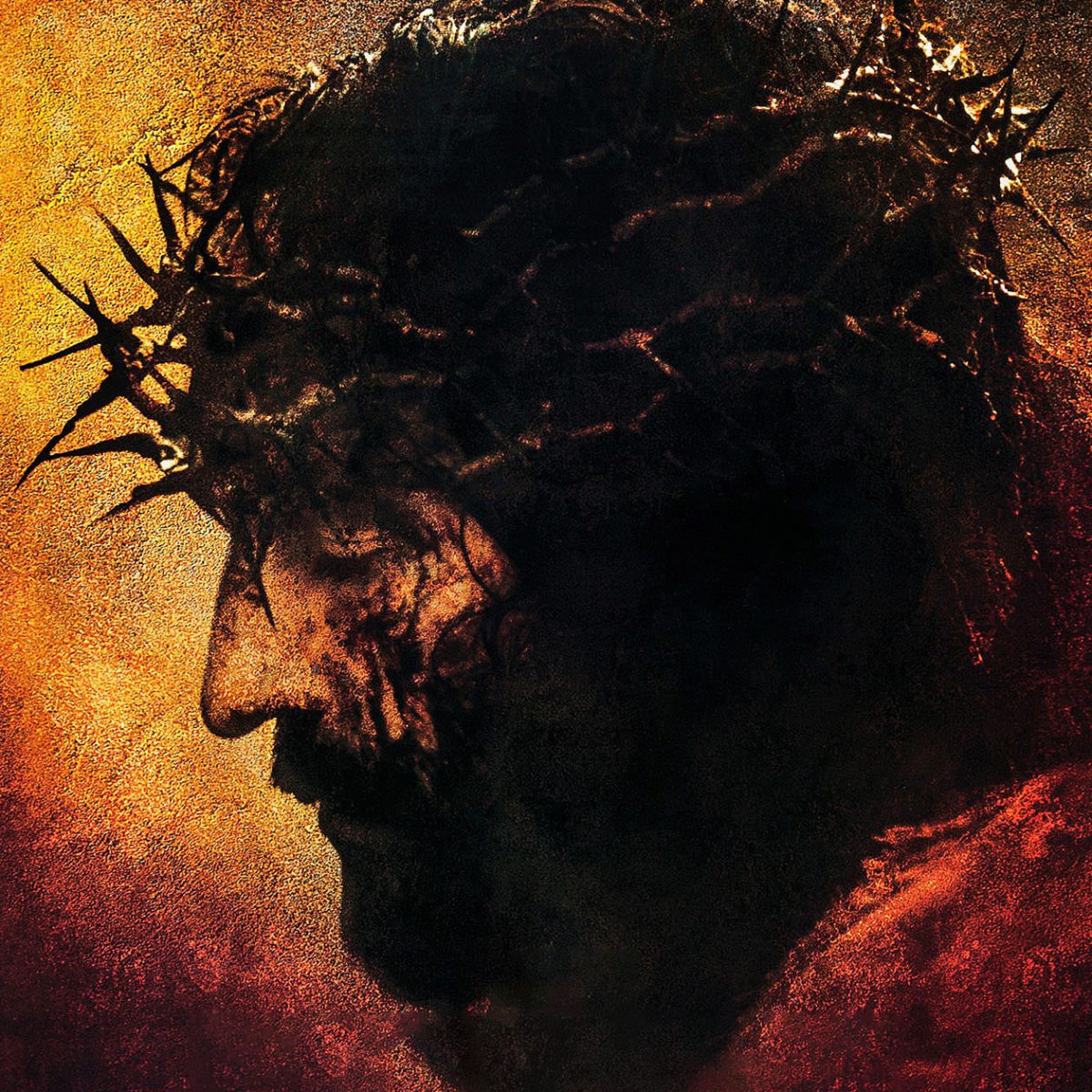
The antisemitic myths about power, loyalty, greed, deicide, the blood libel, Holocaust denialism and anti-Zionism have persisted over time. A descriptive arc from historic origin to contemporary examples contextualizes the faulty logic behind each one.
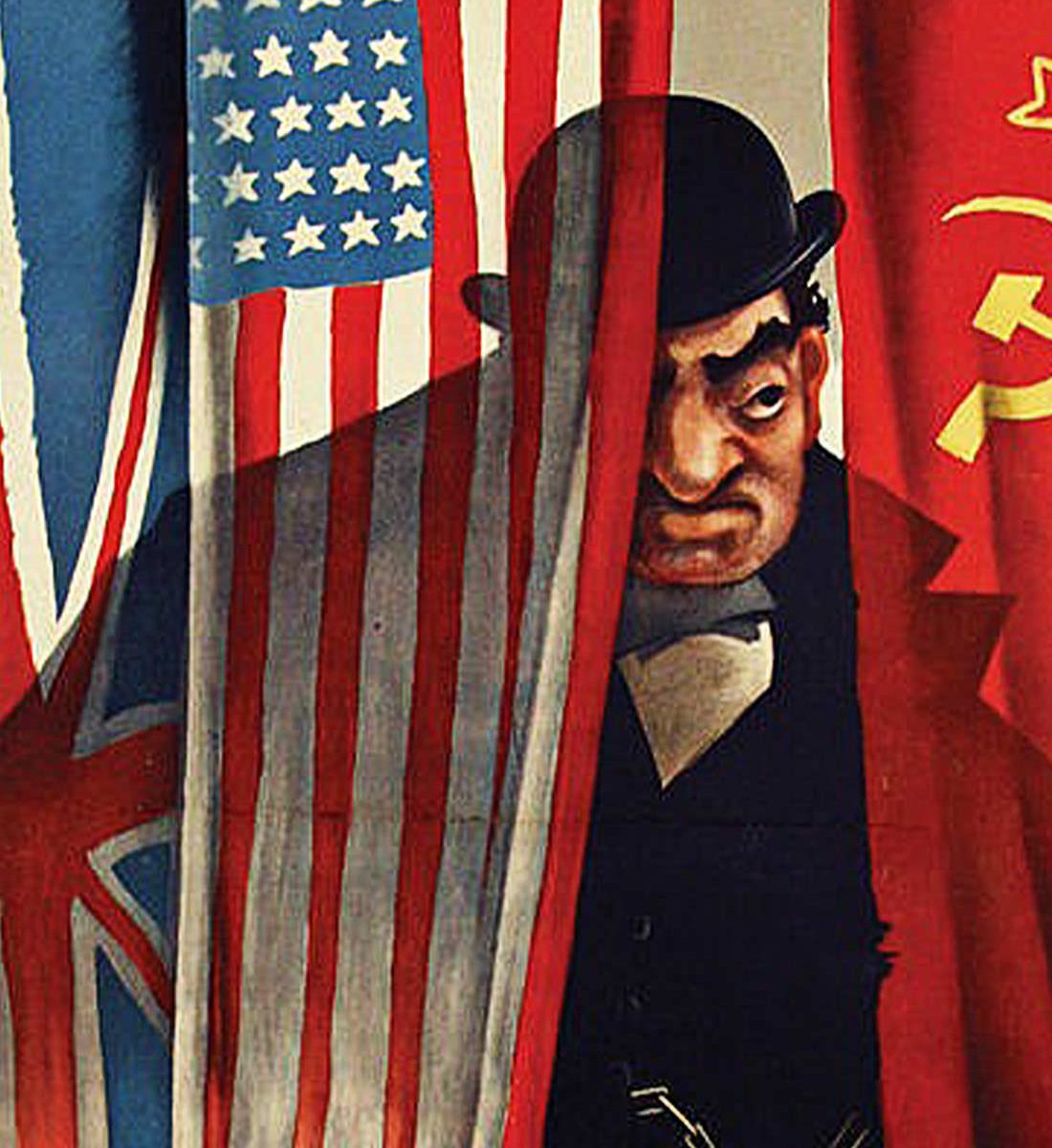
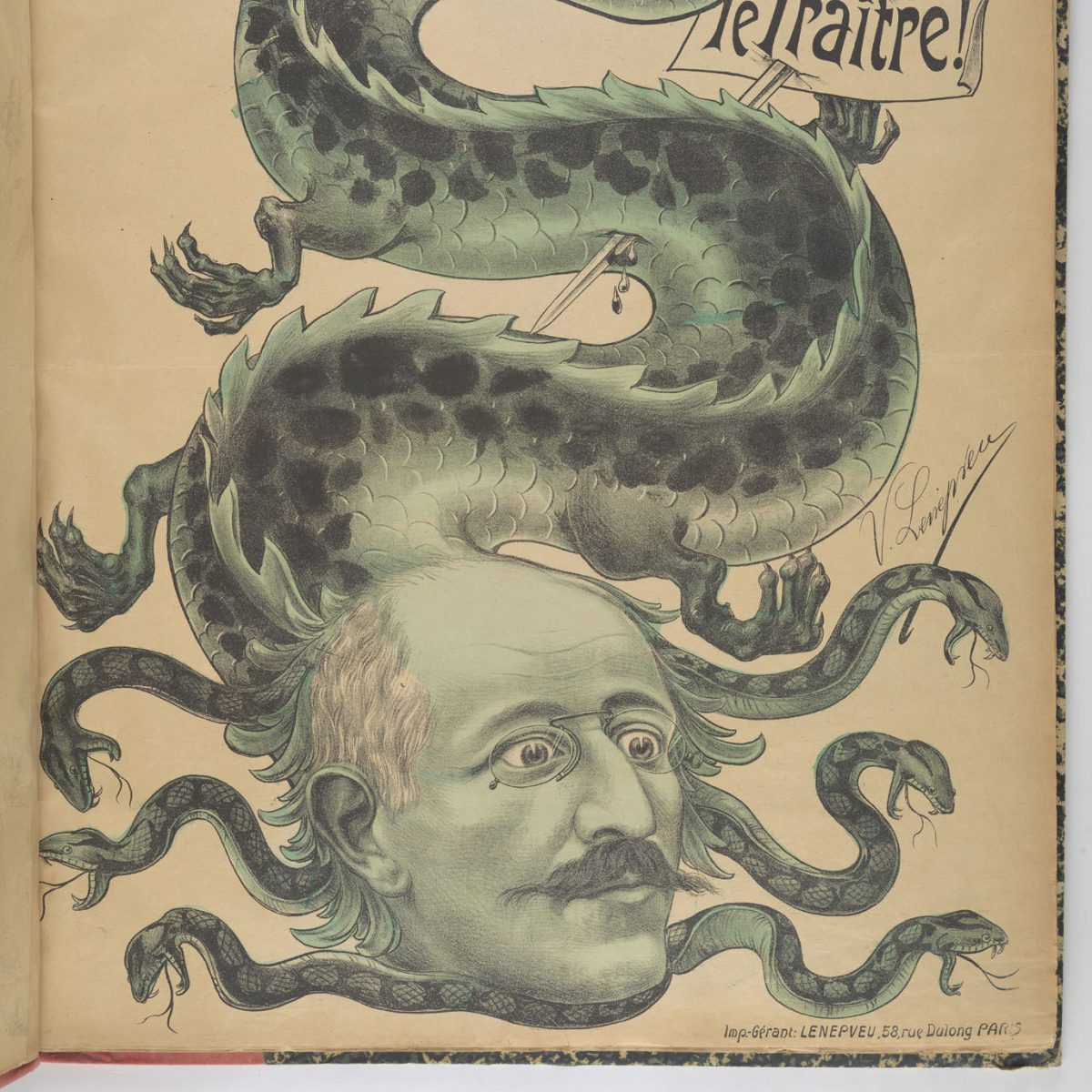
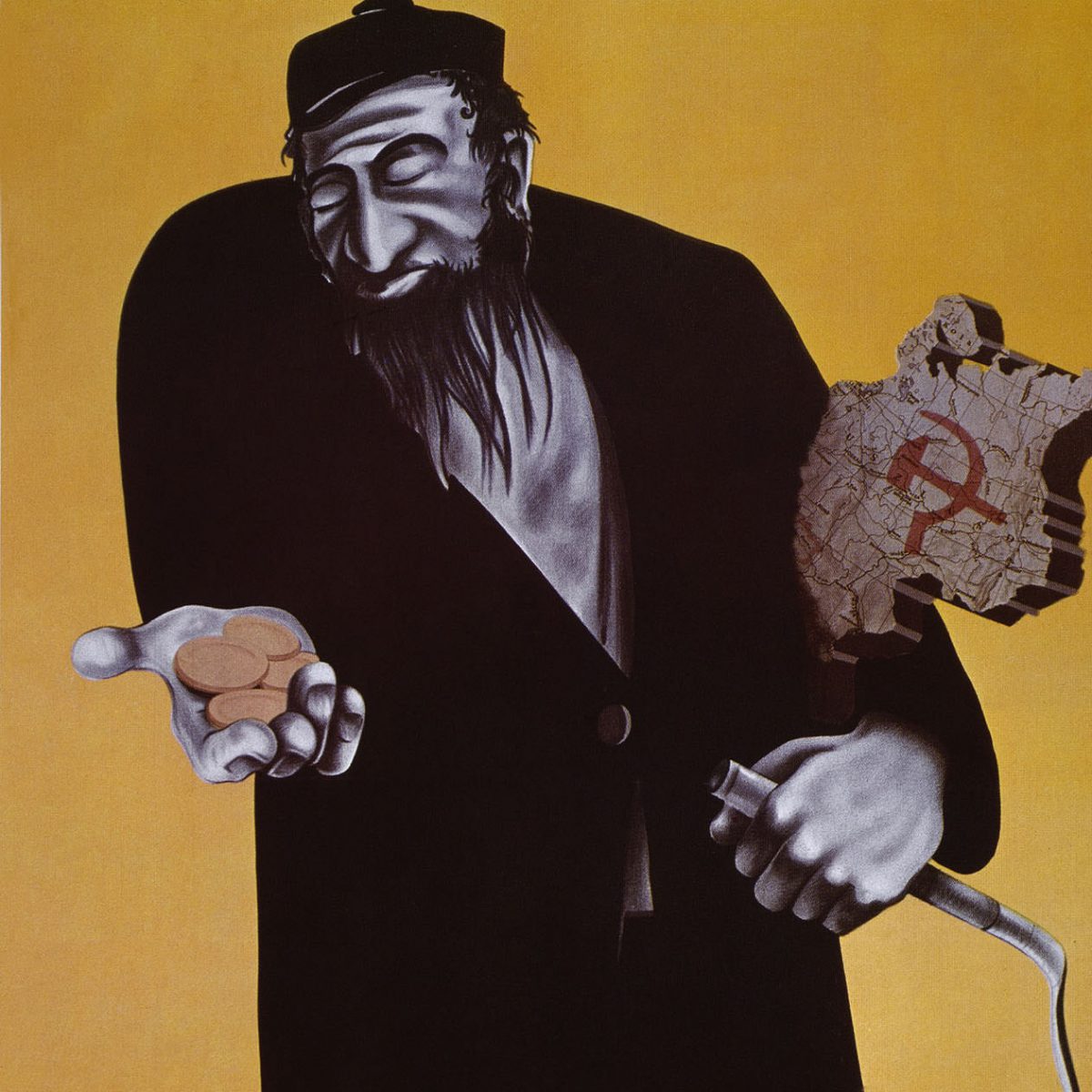
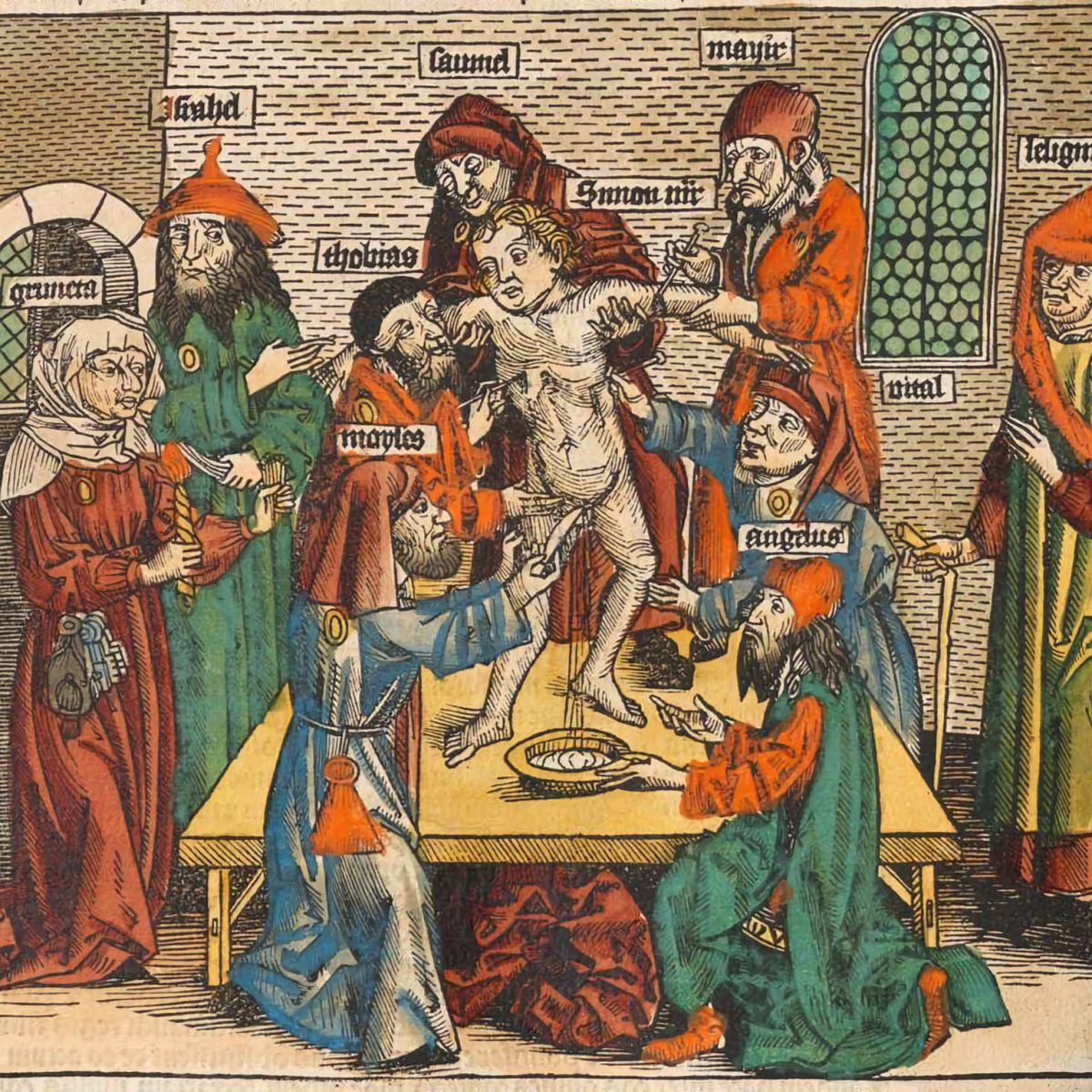
Jews Use Christian Blood for Religious Rituals

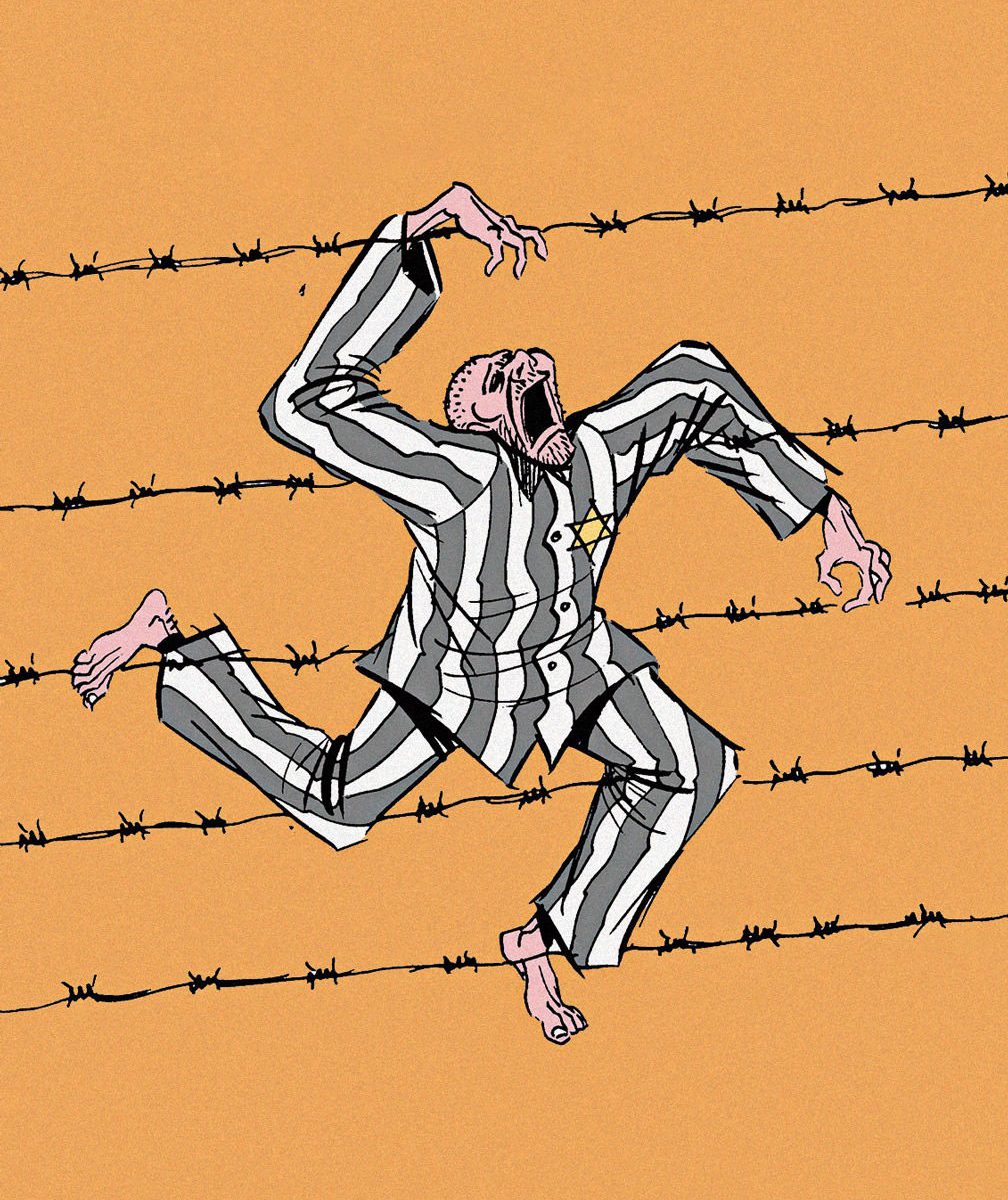
Anti-Zionism or Criticism of Israel is Never Antisemitic
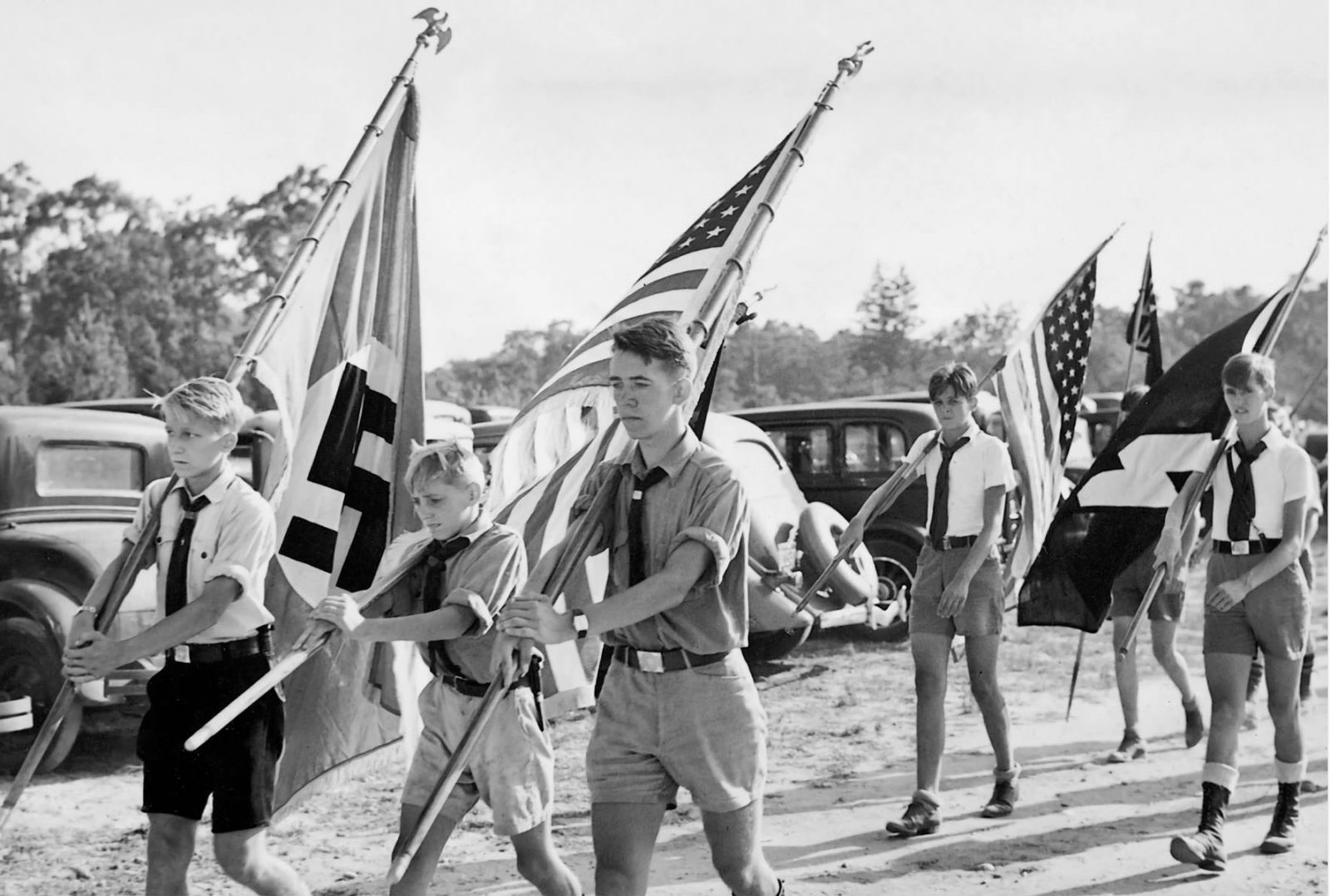
Camp Siegfried, on Long Island, NY, was among the pro-Nazi summer camps affiliated with the German-American Bund.
Conclusion
After reading this report, we hope you will understand the faulty logic of the most pernicious antisemitic myths. You have seen what forms each myth can take. You know why each is wrong.
If you put this knowledge to action, you can help prevent antisemitism from growing in today’s world and contribute to maintaining a civil society in which hate-based ideologies have no place.
https://www.columbiamissourian.com/news/anniversary-of-selma-march-rekindles-ferguson-comparisons/article_37d3ac90-761f-52ea-9152-3b43f3aadb44.html
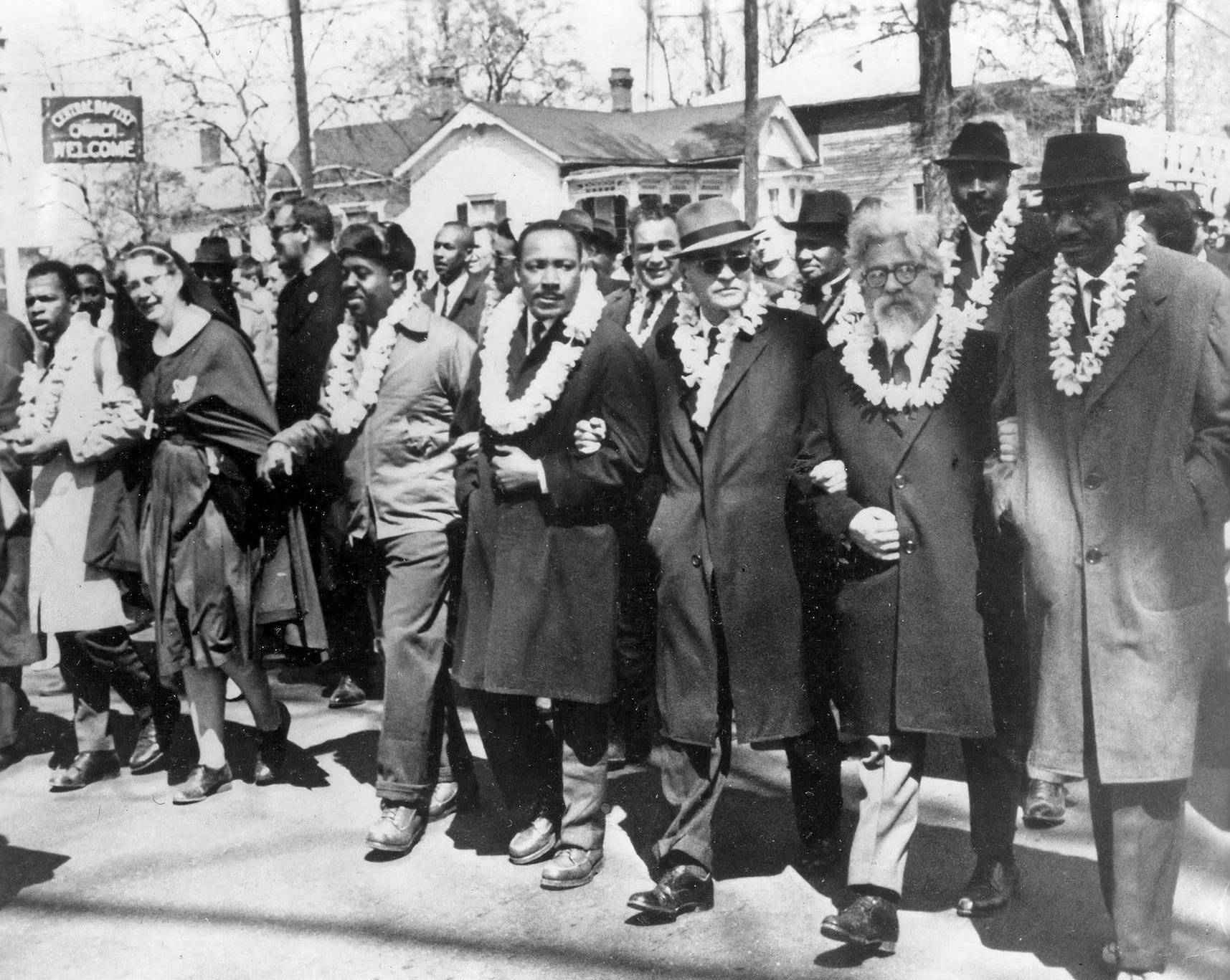
Selma to Montgomery, Alabama March 21, 1965. March leaders (wearing leis) from left to right: John Lewis, a nun, Ralph Abernathy, Martin Luther King, Ralph Bunche, Rabbi Abraham Joshua Heschel and the Reverend Fred Shuttlesworth.
MURRAY RUBIN HAS A GREAT DEAL TO SAY-
I left the practice of pharmacy and my pharmacies ( Vanguard Pharmacy) many years ago and spent my retirement fighting anti-Semitism. I was not successful along with “STAND WITH US” ” WEISENTHAL” “CIJA” and other organizations who have hundreds of meetings mostly with a Jewish audience, raise much money, but have left us no better off in the this century than the last two. What is the problem. We are the problem. The Jews are the problem. Not for what we are because I cannot be prouder that I am a Jew. It relates to not standing up individually as Jews to fight the cancer in the western world called anti-Semitism. Listen to a simple story. I was at my cottage talking to the marina owner (my neighbor) when out of the blue another customer interrupted our conversation with every trope imaginable about Jews. What did I say and do? Nothing. You read right NOTHING .
SPEAK UP Whether it is a friend, a neighbor , a politician or a known anti-Semite your silence gives credibility to all the ridiculous lies spread even by people who mean no harm. Sometimes a person says Jews give more money to charity than others. Maybe they do, probably they do not, who has the statistics, are there statistics, probably not, but if they did, they earned the money and in a democratic country are entitled to spend it as they wish. And a side effect of the charity exaggeration, of course, is that all Jews have money. But in order to fight anti-Semitism you need to have the facts. This is another major problem. I met a woman, Goldi Steiner who has an organization called Canadians for Israel`s Legal Rights CILR and she went to some of the Jewish parochial schools in the Toronto area with a plan to teach about anti-Semitism and anti-Zionism. NOT INTERESTED. Yes, you read right NOT INTERESTED. I earnestly hope North American Jews do not have to wait for a policeman to kill a Jews under their knee to take action. The facts are in this article. Study it and take action to defeat all the lies. Do not let anti-Semitic and anti-Zionistic words go unchallenged.


With antisemitism raising its’ head once again all over the world, I fervently hope and pray that your advice to all will be heeded… Speak up…
Silence is condoning!!!! Be educated with the facts so you can educate others,including our young ones.
Thanks murray